
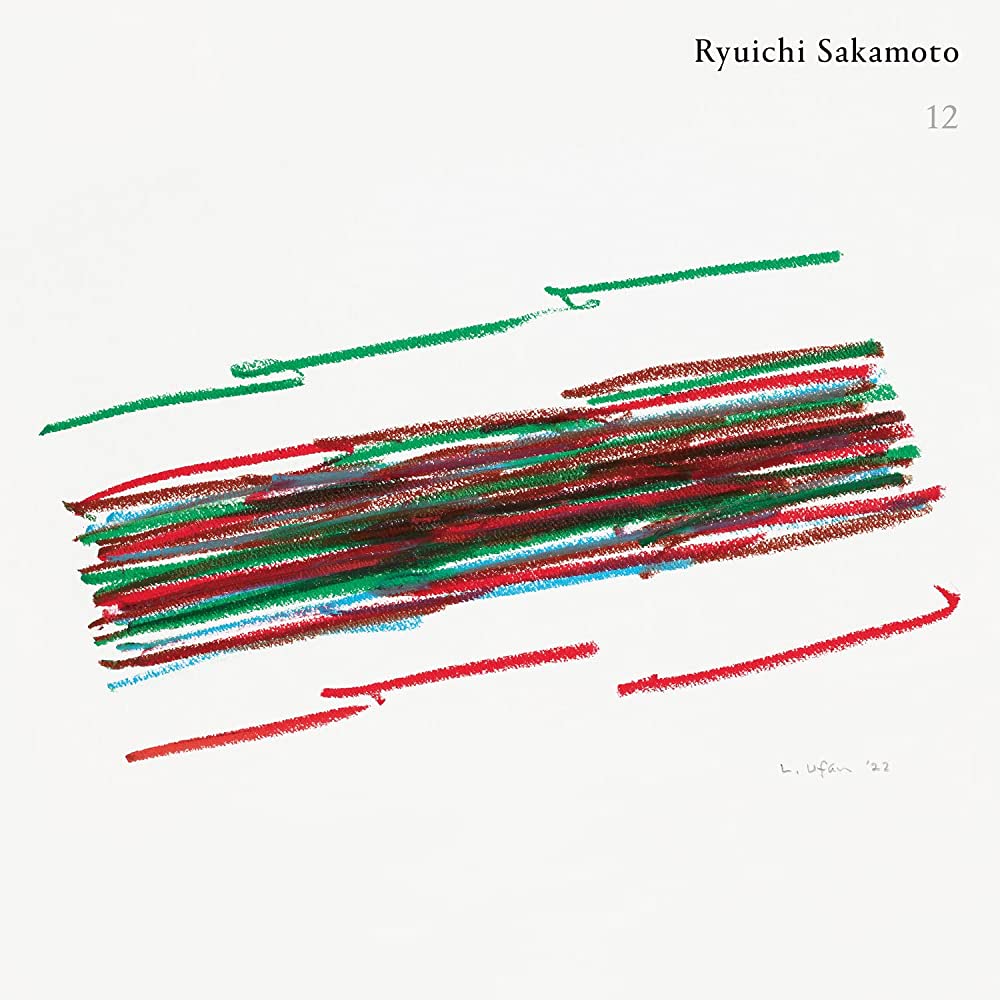
12 is the new album of Japanese composer Ryuichi Sakamoto (ex-Yellow Magic Orchestra), which he describes as “a musical diary”. Although this definition may seem simple, it is very accurate.
Speaking of this work, one can’t ignore the circumstances preceding its creation. In 2014 Ryuichi Sakamoto was diagnosed with throat cancer. Having won that battle, he returned to work, wrote a score for Alejandro González Iñárritu’s The Revenant, released a solo album async, and continued participating in anti-military activism until in 2021, he was diagnosed with rectal cancer, which progressed in 2022.
Ryuichi Sakamoto speaks about his condition with a straightforwardness non-typical for fellow Japanese. He even published a series of articles titled How Many More Times Will I See the Full Moon? in which he shared thoughts, not on his new music, but on life and death. 12, recorded during rough 13 months of therapy, continues the dialogue with the public.
It’s difficult not to compare this album to David Bowie’s Blackstar, but 12 harbours a different vibe. It’s neither a statement nor an attempt to envision what can be after. It’s a sketchbook of momentary states limited to the ability to live and breathe.
The first track alludes to resurfacing from the mute water depth to the light and loudness of the living world ahead. If waking up from anaesthesia needed a musical representation, 20210310 would be it. Inpatient experience reveals itself through the titles, making one wonder if they refer to the therapy regimen, and soft rhythmical hums reminding of an artificial ventilation machine. Those are scattered across the tracks, not allowing one to completely disengage from the pristine and muffled hospital soundscape. The album concludes with the gentle sound of the furin bells (風鈴), believed to chase away evil spirits. Gentle, but the loudest for the bravery of expressing hope.
“I am hoping to make music for a little while longer”, – said Ryuichi Sakamoto in his official commentary. 12 is not a story about the sudden realization of one’s mortality. This is a story about life, its fullness and its finiteness.

 Bad Lemon