
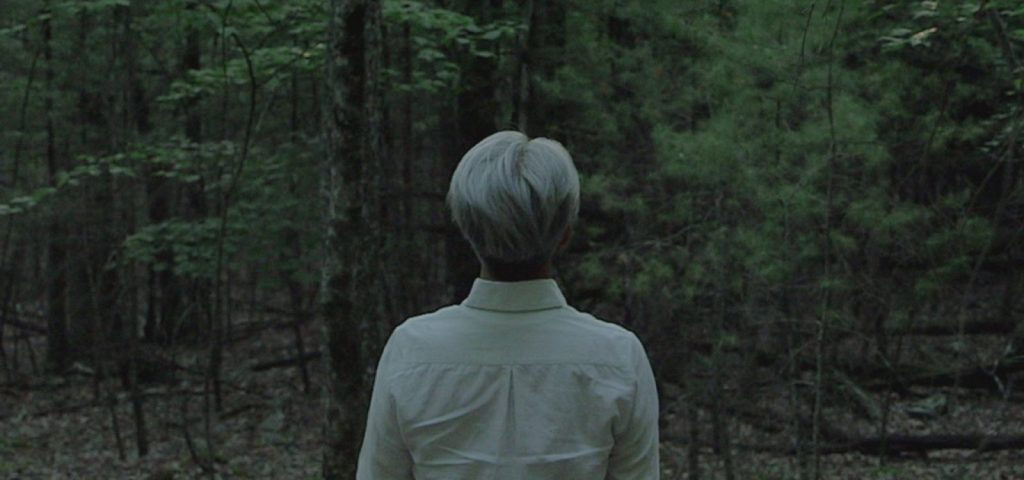
A thin, silver-haired man in a white shirt puts a blue plastic bucket on his head and goes out straight into the rain. He wants to catch some new sounds. This man is Ryuichi Sakamoto, who evolved from a session keyboardist into a multiple Academy Award-winning composer and one of Japan’s most renowned musical figures of the 20th century. And this scene is from Coda, the story of how he battled cancer and returned to work.
It’s symbolic that one of the main characters in Coda is a grand piano that survived the earthquake and tsunami that hit Japan’s east coast in 2011. “I felt as if I was playing the corpse of a piano that had drowned,” Sakamoto recalls. At these words, a viewer might be tempted to believe that the director, Stephen Schible, subtly associates Ryuichi with that instrument. Though the idea is never explicitly stated, the film seems to have been made with the understanding that it could be the last documentary on Sakamoto. It focuses on his most significant works and core ideas. The title is fitting, as a coda is what one always hears at the end of a musical work, its final passage.
As you watch, it’s interesting to note what has been left out of the picture. Who was ‘forgotten’? Collaborations with Madonna and Iggy Pop, Michael Jackson covering Yellow Magic Orchestra? Coda isn’t about success or fame. It’s about choosing the path and inventing one’s own framework. Choosing between remaining an idol and taking the courage to bargain with Nagisa Oshima: ‘If you want me to act in your movie with David Bowie, I’ll also write the soundtrack.’ Merry Christmas, Mr. Lawrence, which became Ryuichi Sakamoto’s gateway to the world of big cinema and international acclaim, owes to this courage. Thus, the key figures in Coda are Nagisa Oshima, Bernardo Bertolucci, and Alejandro González Iñárritu, not YMO. Notably, Sakamoto’s latest album at the time of filming, async, was a soundtrack for an imaginary Andrei Tarkovsky movie. If the director can’t invite you to collaborate, you can create the opportunity yourself.
Coda also offers us a glimpse into how the great master worked during those days. However, director Schieble’s intent wasn’t to reveal the behind-the-scenes of the creative process but rather to capture Sakamoto’s journey back to music as a path to rediscovering himself—a theme to which almost everyone can relate. That’s why the movie ends with simple yet profound words: ‘I decided to practice a little bit every day’. A perfect closing note in a story about a man who knows his true calling and why he must continue.

 Bad Lemon