
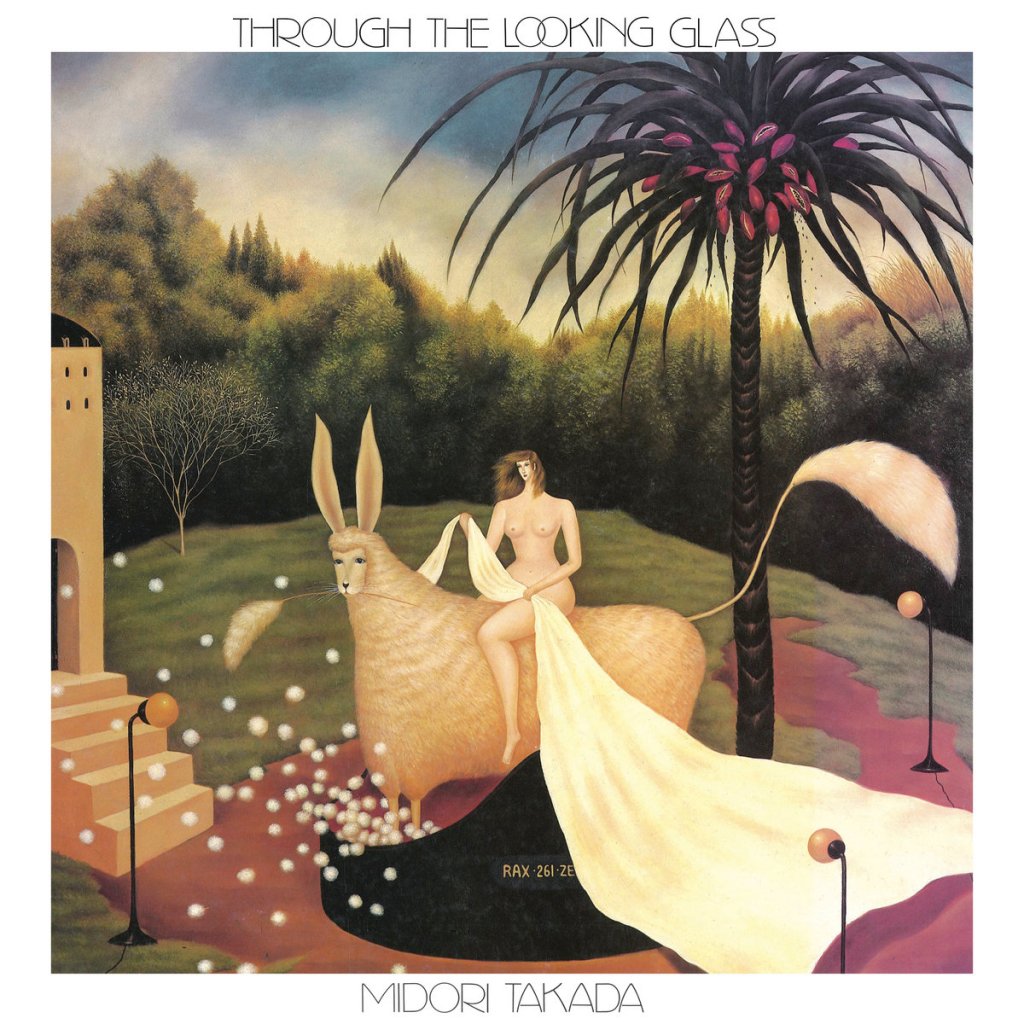
This album has an extraordinary fate. It’s not every day that a half-forgotten record claws its way out of obscurity more than 30 years after its release.
Through the Looking Glass was released in 1983 on RCA Red Seal, a label primarily known for its focus on neo-classical music. Midori Takada, classically trained percussionist who had performed with Berlin’s RIAS Symphony Orchestra in the mid-seventies, seemed like a natural fit for the label’s artist choice. Yet the album proved too distinctive, and the sales—modest to the point of being negligible—left the label disappointed. Red Seal lost interest in their artist. That could have been the end of the story.
With the adventure of the modern technological era, the album was digitized and uploaded to YouTube. The platform’s recommendation algorithm began introducing it to fans of Brian Eno – slowly the album began its climb into the playlists of a global audience. Through the Looking Glass caught the attention of Swiss label WRWTFWW Records, which also discovered that collectors of Japanese vinyl were ready to pay $1,000 for an original pressing. This figure, impressive to anyone who is happily unfamiliar with Japanese auctions for rare records, helped solidify the album’s cult status. In 2017, Through the Looking Glass was reissued, garnering attention from The Guardian and The New Yorker.
All of this might seem like a series of happy coincidences, but Through the Looking Glass truly deserves its acclaim. The record is concise and remarkably clear in its vision. It is captivating, partly because it was recorded in just two days, with Takada performing every part herself—marimba, drums, harmonica, even a Coca-Cola bottle. The melodies bear the influence of Steve Reich and Terry Riley, but the deeper inspiration lies in traditional African music. While creating the album, Takada immersed herself in recordings of drummers from Tanzania and Zimbabwe, attempting to replicate their rhythmic structures. The result is simple yet striking —a hypnotic evocation of ancient melodies that might have drifted across the savanna when the world was still young.
Perhaps it’s a good thing we’ve learned to listen to and appreciate these sounds once again. It reminds us that sometimes, the most remarkable journeys begin with a rediscovery of what we thought we’d lost.

 Bad Lemon
fascinating! 100 2025 Julian Cope. Japrocksampler: How the Post-war Japanese Blew Their Minds on Rock ‘n’ Roll likable
LikeLike