
-
Haruomi Hosono: Hochono House
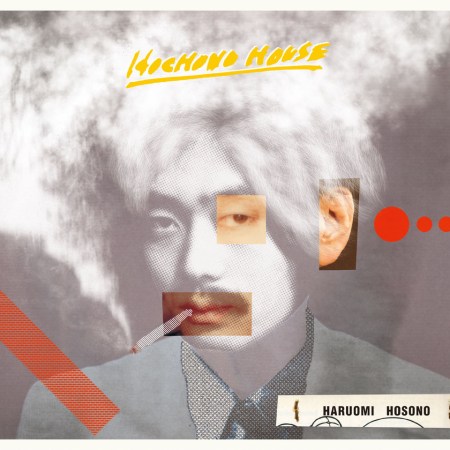

Hochono House, an electronic remake of Haruomi Hosono’s (ex-Yellow Magic Orchestra) first solo album, seems a treacherous doppelganger. It only pretends not to be an alien in this world.
Hosono recorded his debut album, Hosono House (1973), right after the folk band Happy End, in which he had played bass, broke up. There were going to be five more years before YMO’s advent, and at that particular moment, Hosono was way more into his beloved Hawaiian melodies than electronic music. He assembled a 16-track recorder in the living room of his small apartment on the outskirts of Tokyo and transformed his bedroom into a recording studio. The recordings he made there became the basis of one of the most popular albums in his diverse discography.
Hochono House appeared in 2019 to commemorate 50 years of the musician’s professional career. Initially, Hosono planned to stick to the concept of the original record, which was to rearrange the same songs with catchier vocals. But no man ever steps in the same river twice. With this album, the musician is as if looking at his own reflection through the waters of past while it’s evading him, leaving only a distorted picture.
He seems to understand it himself. That’s why album tracks go in reverse order and sound like they are getting through radio interference. 薔薇と野獣 (The Rose and the Beast) reminds you of his collaborations with YMO colleague Yukihiro Takahashi, 恋は桃色 (Love is Pink) tips Kraftwerk a nod. At the same time, 福は内鬼は外 (Demon Out! Happiness In![1]) echoes not only the tropics but also the American rock’n’roll tradition, reconstructing which Hosono spent recent years.
The environment changed too. “Back then, in 1973, you could still feel the Tokyo of old, – Hosono recalls, – but it was already disappearing. We used to lament that with Takashi [Matsumoto, Happy End’s drummer/lyricist] and the others. But now, it’s all gone. I have no emotional attachment to modern Tokyo”.
Sadness is the flavor that distinguishes new versions of the songs from their cheerful, sun-drenched originals. Sadness whistles in Hochono House, like the draught in an old house. You can hear it clearly in the final Rock-A-Bye My Baby played using only an acoustic guitar and a metronome. Like the ghost of the past, it takes on flesh for a few minutes to disappear again in the depths of the old mirror.
Notes:
- “Oni ha Soto! Fuku ha Uchi!”
On Setsubun (節分), the day before the first day of spring on the Japanese calendar, the Japanese throw roasted soybeans at demons, chase them out, and welcome good luck. When throwing the beans, you are supposed to shout, ‘Oni wa soto! Fuku wa uchi!’
- “Oni ha Soto! Fuku ha Uchi!”
-
Masami Tsuchiya: “I tried to express the weirdness and freshness which the domestic music didn’t have at that time”


Masami Tsuchiya, singer-songwriter, multi-instrumentalist and producer, is one of those musicians, whose influence on the Japanese rock scene can hardly be overestimated. He started in the beginning of the 70-s as a support guitarist and made his way to the producer of popular bands of the 90-s like THE WILLARD and BLANKEY JET CITY. His own band IPPU-DO along with YELLOW MAGIC ORCHESTRA represented avant-garde electronic music of Japan overseas. Among those he worked with are Mick Karn and Simon Le Bon, Ryuichi Sakamoto and Sugizo. His solo albums are a showcase of art rock in post new wave era.
It was interesting to hear the impressions of the artist himself on what had defined his music, and Masami Tsuchiya was very kind to answer our questions.
– Please tell us what was your musical environment when you were growing up? How you discovered new music? Was it through the radio, LP records or something else? What music influenced you?
– I never can say that I grew up in the good environment for the music, and moreover, I had not been allowed to listen to rock music nor play the guitar.
I used to live in the small town, and I felt the atmosphere of THE BEATLES, THE ROLLING STONES and THE YARDBIRDS in the noise which had been sent from the AM radio station in Tokyo.
I felt antisocial and sublime spirit from the strange sound which I had never heard.
– How did it come you decided that making music would be your way?
– Except that there was a strong passion for the music, there is no special reason.
However, opportunity is when I was playing the guitar in the schoolyard of the university, I was scouted to the band which I participated in the first recording.
– What was the first concert you attended? What do you remember about this experience?
– I saw THE GOLDEN CUPS at the public hall in the town where I grew up.
I remember that shiver ran through my body when I saw it.
– What do you remember about your first experience of recording in the studio?
My first recording experience as the professional musician is the solo guitar dubbing for Ken Ohashi at Polydor Records recording studio which was located in Shibuya.
I remember that Yoshui Inoue was recording in the studio next door.
– How do you see the niche IPPU-DO took in the years of band’s highlight? What defined your interest in the sound you tried to convey with IPPU-DO?
– Though I didn’t conscious at that time, I think that I tried to express the weirdness and freshness which the domestic music didn’t have at that time.
I made the new style which is not punk nor techno, and it was recognized as «new wave» by the masses.
– Comparing the overseas band JAPAN and Japanese bands you worked with, were there any differences in the way how the work was organised/music industry functioned?
– Completely different. In the European and American music industry, the responsibilities among each staffs are clearer and it needs more professional skills.
Unfortunately, I should say Japanese style is opposite angle.
– You collaborated with Mick Karn on certain his albums. What do you remember about working with him? What were your impressions?
– Every time I play with him, I could not help recognizing that he obviously is genius.
He poured the melody and the lively to the music which nobody can conceive.
I felt happy when I witnessed the special moment which he made.
– You are also known to having worked with Ryuichi Sakamoto. How did it happen you started working together?
– At the middle of 1970’s, he joined as the keyboard player to the session band which I belonged to.
– When writing music, how do you decide it will sound this particular way?
– When playing guitar, I always get good idea. I don’t have any special method for creating sound.
– In solo lyrics, you often touch on poetical images. What defined your affection to poetry?
– Silence.
– You have an experience of a movie actor in 1980s. Was it accidentally that you came to the movie industry, or a choice and what did it mean to you?
– It came to me by chance. It doesn’t have any special meanings.
– We feel awkward touching on your recent project, KA.F.KA in view of the loss of your colleague. We mourn about Morioka-san together with his family and people who knew him as we deeply loved and admired his music. But at the same, time we cannot help asking what does this project mean for you? You worked with various genres over the years of your music career, but with this project you seem to have chosen to reconstruct the sound of post punk era that was represented by, for example, JOY DIVISION. Why did you choose this era to refer to?
The suitable expression of that era is «The previous night of the new wave».
I formed KA.F.KA to return to «that night». And I wanted to find the place which my conviction and passion strongly headed at the time when JOY DIVISION existed. But it existed nowhere.
There was only the light of the new age which can be seen far dimly. I just imagine that scene that I saw is the same one that Ian Curtis saw.
JOY DIVISION is described as «New Wave band», but they had left already to other place in the previous night of the new wave.
-
Hiroshi Yoshimura: GREEN
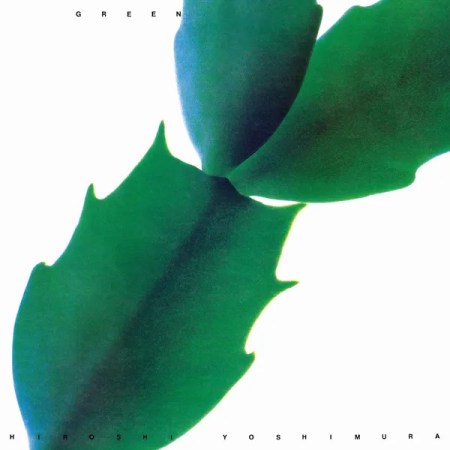
Time brings bizarre artifacts ashore. Today, Hiroshi Yoshimura is considered one of the central figures in the history of Japanese electronic music. Yet, ten years ago, his works were almost unknown outside the professional musicians’ circles.
Hiroshi Yoshimura was an outsider in show business. Having played in the electronic group Anonyme and recorded a track “Alma’s Cloud” commissioned by the NHK in the 70s, he later chose to do private commissions and experiment with sound design. His works would sound in train stations, hotels and airports, museums, and fashion shows. He was one of the pioneers of kankyō ongaku, Japanese environmental music. If one wants to get acquainted with his music, it’s worth trying to start with GREEN.
First released in 1986 on AIR Records, the disc has never been reissued until recently. Many years later, some fans pulled GREEN out to Youtube, which algorithms started suggesting it as Brian Eno-relevant, and the album gained a new audience. They were so many that Discogs was offering up to $1,000 for the original edition. Independent labels got interested in Yoshimura’s work, and the Light In The Attic even opened a WATER COPY division to release this CD.
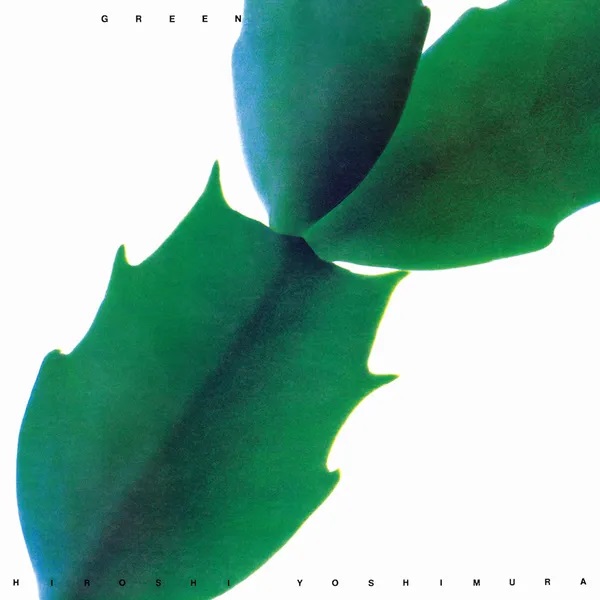
Yoshimura once said that applicably to this work, green is not just a color but “the comfortable scenery of the natural cycle.” But he didn’t specify what exactly the scenery hides and why one may need comfort. Recorded in the heart of Tokyo, GREEN is not only about the inside. It is also about what permeates from the outside. There are so many latent dynamics and sharp, nervous tension, no wonder it’s not grass on the cover but zygocactus. It has claws.

